
Chechil and Other Stretch Cheeses: The Technology of “Fibrous” Cheese Production
There are cheeses that you don’t want to cut, but rather unravel like a ball of thread. That’s exactly what Chechil cheese looks like — smoked braids of thin fibers that can be separated into individual threads with your fingers. This effect isn’t a coincidence or a marketing gimmick, but the result of a special technology that transforms ordinary cheese curd into something resembling textiles. Behind the stretchiness and layering lies a whole science of temperature, acidity, and time.
Table of Contents
What Is Stretch Cheese Anyway?
Stretch cheeses are a family of products in which the curd undergoes a “melting and stretching” stage. This includes mozzarella, provolone, suluguni, and, of course, chechil.
They all have one thing in common: after the milk has curdled, the curd is heated and literally stretched, like dough, until it becomes elastic and smooth. This step is what distinguishes them from regular brine or hard cheeses, which are formed without such mechanical processing.
How Fibrous Structure Is Created
The texture forms because proteins change when heated and reach the right acidity. At this point, they line up, and when the mass is stretched and folded, the fibers are fixed in place. The process usually looks like this:
- Fertilization of milk to the desired acidity.
- Heating the curd in hot water or whey.
- Testing the mass for tensile strength.
- Repeated stretching and folding of the layer.
- Twisting into ropes or braids.
- Cooling in cold water to fix the shape.
- Brine curing and, if desired, smoking.
Each of these steps affects the final result. Overheating the mass will make the cheese rubbery; underheating will prevent the fibers from forming. Therefore, the master’s focus is not on a timer but on the sensation. The right mixture stretches like a long ribbon, doesn’t tear, and has a shiny sheen.
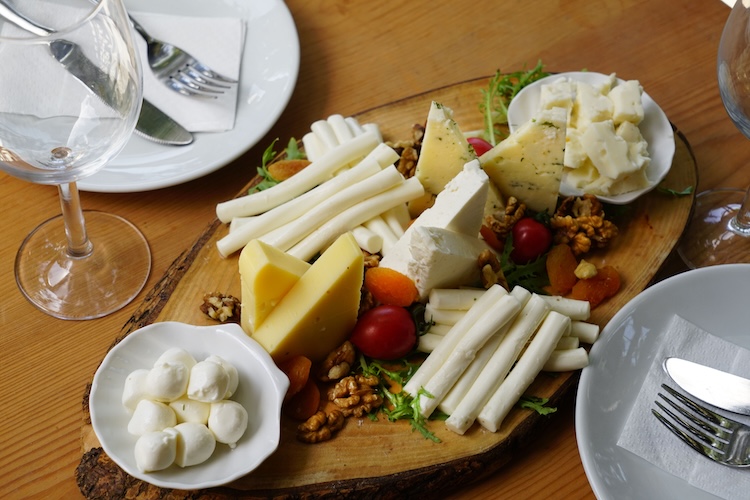
Photo by Engin Akyurt from Pexels
Chechil as a Striking Example of Technology
Among all stretched cheeses, chechil stands out for its presentation. It’s not simply rolled into a ball like mozzarella but braided or coiled into balls, sometimes smoked for a richer flavor. This cheese originates from the Caucasus. It is traditionally made from cow’s or sheep’s milk, or less commonly from a mixture. Salty, dense, with a slight tartness, it holds its shape well when sliced and yet easily separates into strands.
Where and How Are These Cheeses Used?
Stretched cheeses are versatile precisely because of their structure. They are loved for their ability to perform equally well in cold appetizers and heated dishes. Here are some typical uses:
- sliced for cheese platters and appetizers;
- add to beer and spirits;
- filling for khachapuri and pies;
- topping for pizza and casseroles;
- ingredient for Greek and Balkan salads;
- ingredient for cheese braids and snacks;
- base for hot sandwiches.
This variety of uses explains why these cheeses consistently top the bestseller lists of ethnic and specialty food retailers. Consumers perceive them not as exotic but as a familiar product with a familiar texture and recognizable flavor.
Conclusion
Stretched cheeses are an example of how the simple physics of proteins can transform into a culinary tradition. Knowing the technology makes it easier to understand why one piece of cheese can be pulled apart into strings, while another can only be sliced with a knife.
For retail and specialty stores, these cheeses are not just products. They help keep customers who want real European flavors. GMI-Trading works with dairy products and helps US retailers find the right items for their customers — from common classics to niche brands.
Photo Credit
Photo by: Husien Bisky
Share the love!
Related recipes 🔗
Becky ✍️
 Hi, I am Becky. I am a passionate recipe maker and having been a coeliac (celiac) for 30+ years I focus on gluten-free recipes. My blog is my online cookbook of gluten-free tasty recipes. You can follow me on X: @beckygwg
Meet Becky 👉