
How To Create A Bright And Welcoming Kitchen For Gluten-Free Home Cooking
For anyone who regularly prepares gluten-free meals, the kitchen is much more than a place to cook. It is a space where ingredients need to be organized carefully, surfaces need to be easy to clean, and enough room is required to prepare food comfortably without unnecessary confusion.
Good kitchen design can make these everyday tasks easier while creating a room that feels bright, welcoming, and enjoyable to spend time in. By combining practical storage, thoughtful lighting, durable materials, and a cohesive color palette, homeowners can create a kitchen that supports gluten-free cooking without sacrificing style.
Table of Contents
Start With A Light And Airy Color Palette
Color has a major influence on how spacious and inviting a kitchen feels. White, cream, pale gray, and other soft neutral shades reflect natural and artificial light, helping even a relatively small kitchen appear brighter and more open.
A lighter palette does not mean that every surface needs to look identical. Warm wood, natural stone, muted green, brushed metal, or colorful kitchen accessories can introduce contrast while maintaining an airy overall appearance.
White cabinetry remains especially popular because it provides a versatile foundation for different design styles. It can work equally well in a traditional farmhouse kitchen, a minimalist contemporary space, or a family-friendly room filled with personal touches.
Make Natural Light A Priority
Natural light can instantly make a kitchen feel more comfortable and welcoming. Keeping windows unobstructed, choosing lightweight window treatments, and positioning preparation areas close to windows can help homeowners make better use of the daylight available.
Where possible, reflective surfaces can help distribute that light throughout the room. Light countertops, glossy tiles, mirrors, glass-front cabinets, and stainless steel appliances can all prevent darker areas from feeling enclosed.
Artificial lighting should complement natural daylight rather than simply replace it after sunset. A combination of ceiling lighting, pendant lights, and under-cabinet illumination makes it easier to see ingredients clearly while preparing meals and creates a warmer atmosphere when cooking is finished.
Create Dedicated Gluten-Free Storage Areas
Organization is particularly valuable in households where both gluten-containing and gluten-free foods are present. Creating clearly defined storage areas for gluten-free flour, pasta, bread, baking ingredients, and snacks can reduce mix-ups and make everyday meal preparation more efficient.
Clear containers and straightforward labels are useful for frequently used pantry staples. They make ingredients easier to identify at a glance while helping cooks keep track of quantities and notice when something needs replacing.
Cabinets and drawers can also be assigned specific purposes instead of becoming general storage areas. When baking equipment, cutting boards, utensils, and specialty ingredients have predictable locations, the kitchen becomes easier for everyone in the household to navigate.
Choose Surfaces That Are Easy To Maintain
A practical gluten-free kitchen benefits from surfaces that can be cleaned thoroughly and easily. Crumbs and food residue can collect around seams, damaged countertops, complicated decorative details, and other areas that are difficult to wipe down.
Smooth, durable countertops provide a straightforward workspace for chopping vegetables, assembling meals, and preparing gluten-free baked goods. Materials should be selected according to the household’s cooking habits as well as appearance, since a beautiful surface can quickly become frustrating if it requires constant maintenance.
The same principle applies to backsplashes, flooring, cabinet fronts, and appliances. Simple finishes and accessible surfaces can reduce cleaning time while helping the kitchen maintain its fresh, uncluttered appearance.
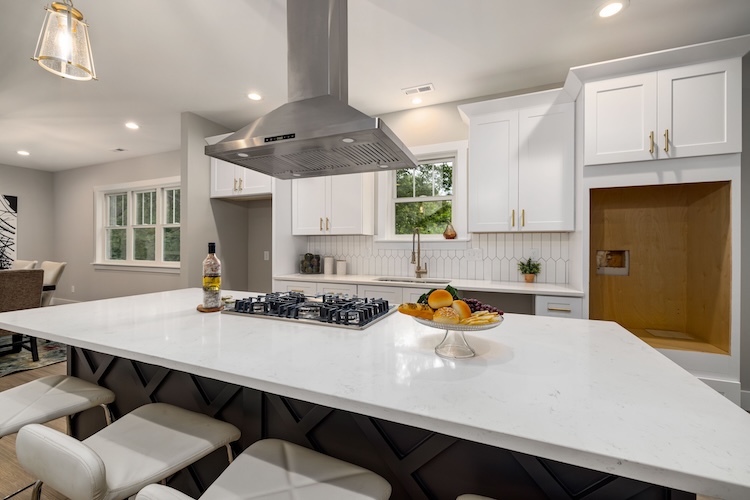
Photo by Curtis Adams from Pexels
Use White Features To Keep The Room Feeling Open
Large kitchen features can have a surprisingly strong effect on the overall atmosphere of the room. Dark cabinetry or bulky appliances can work beautifully in the right setting, but lighter finishes often help substantial fixtures blend more naturally into a bright kitchen.
This can be particularly useful around the cooking zone, where ventilation is essential but the range hood may occupy considerable visual space. Homeowners exploring white designs can look at options from CopperSmith when considering how a range hood could complement lighter cabinetry, walls, and countertops without becoming visually overwhelming.
A white range hood can also provide a useful bridge between functional equipment and the wider kitchen design. Rather than treating ventilation as an afterthought, incorporating it into the color scheme can make the cooking area feel more cohesive.
Plan Work Zones Around Everyday Cooking
An attractive kitchen still needs to function efficiently. Instead of focusing entirely on the traditional concept of the kitchen work triangle, homeowners can think about the specific tasks they perform most often and create zones around those activities.
Someone who regularly makes gluten-free bread, for example, may benefit from keeping flour, mixing bowls, measuring tools, and a stand mixer within the same section of the kitchen. A household that prepares plenty of fresh meals might prioritize a spacious chopping area near the sink and refrigerator.
This approach can also make shared kitchens easier to use. Different family members can prepare food, wash dishes, or collect ingredients without constantly crossing paths, which is particularly helpful during busy mornings and evening meals.
Reduce Clutter Without Losing Personality
Bright kitchens tend to feel their best when countertops are relatively clear. Too many appliances, containers, packages, and utensils can make even a large room feel crowded and leave less usable space for food preparation.
That does not mean everything needs to be hidden behind cabinet doors. A carefully chosen fruit bowl, herb pots, attractive jars, cookbooks, or favorite serving pieces can add warmth and personality without overwhelming the room.
The goal is to create a balance between accessibility and visual simplicity. Items used every day can remain within easy reach, while occasional appliances and specialty equipment can be stored until needed.
Add Warmth Through Natural Materials
An all-white kitchen can sometimes feel clinical if it lacks variation in texture. Introducing natural materials is an effective way to soften the space and make it feel more connected to the rest of the home.
Wooden stools, woven baskets, stone countertops, ceramic dishes, and natural textiles can provide warmth without making the kitchen look darker. Even relatively small details, such as a wooden chopping board displayed against a backsplash, can create a more relaxed atmosphere.
Plants and fresh herbs are another simple addition. Besides adding color, herbs such as basil, parsley, rosemary, and mint can be useful ingredients for gluten-free home cooking and bring a sense of freshness to the room.
Make The Kitchen Comfortable For Everyone
A welcoming kitchen should encourage people to spend time together rather than functioning solely as a workspace. Seating around an island, a breakfast nook, or even a couple of stools can create opportunities for family members and guests to talk while meals are being prepared.
Comfort also comes from practical details. Clear walkways, accessible storage, sufficient electrical outlets, conveniently positioned trash and recycling bins, and adequate counter space can all make daily routines feel less frustrating.
For households that frequently entertain, an organized kitchen can make serving gluten-free meals easier as well. Having designated areas for preparation and serving helps the cook remain involved with guests rather than spending the entire gathering searching through cabinets or clearing crowded counters.
Build A Kitchen That Makes Home Cooking Enjoyable
A bright and welcoming gluten-free kitchen does not require a complete renovation or an entirely white interior. Thoughtful improvements to lighting, storage, surfaces, work zones, and organization can make a noticeable difference to both the appearance of the room and the experience of preparing food.
Most importantly, the kitchen should reflect the way the household actually cooks and lives. When practical choices are combined with warm materials and personal details, the result can be a comfortable space that makes preparing gluten-free breakfasts, family dinners, baked treats, and special meals something to look forward to.
Photo Credit
Photo by: Curtis Adams
Share the love!
Related recipes 🔗
Becky ✍️
 Hi, I am Becky. I am a passionate recipe maker and having been a coeliac (celiac) for 30+ years I focus on gluten-free recipes. My blog is my online cookbook of gluten-free tasty recipes. You can follow me on X: @beckygwg
Meet Becky 👉