
Gluten-Free Drinks Guide: What To Check When Someone Else Is Serving Them
Drinks often feel like the simple part of eating gluten-free. Compared with bread, pasta, cakes, and sauces, a cup of coffee or a glass of juice can seem easy to trust.
Most plain drinks are naturally gluten-free, but the picture changes once syrups, powders, flavourings, toppings, shared equipment, or staff preparation are involved. When you’re away from home and someone else is making your drink, a quick question can save a lot of worry.
Table of Contents
Why Gluten-Free Drinks Still Need a Second Look
Water, tea, standard coffee, and simple fruit juice are usually straightforward. The uncertainty tends to begin when a drink is mixed, blended, shaken, or finished with extras.
Flavoured coffees, milkshakes, smoothies, cocktails, powdered drinks, and seasonal specials can all include ingredients that are easy to miss. Malt flavouring, biscuit toppings, cereal-based add-ins, some oat milks, and shared blenders can turn a safe-looking drink into one that needs a closer check.
Preparation matters as much as the ingredients. In busy cafés, restaurants, hotels, and events, a clean jug, a separate blender, a fresh spoon, or a clear allergen answer can make the difference between a confident choice and a guessing game.
Smoothies, Shakes and Blended Drinks
Smoothies are a perfect example of why drinks deserve attention. Fruit, milk, and yoghurt are often gluten-free on their own, but shared blenders, protein powders, cereal toppings, biscuit pieces, and flavoured syrups can change things quickly.
If you enjoy smoothies, it helps to know what a simple gluten-free version should look like before ordering one away from home. These refreshing smoothie ideas are a useful starting point for safe flavour combinations without complicated add-ins.
Milkshakes, frappes, seasonal coffees, and cocktails need the same careful approach. Ask what goes into the drink, whether any toppings contain gluten, and whether the equipment is cleaned between orders. A drink does not need to look complicated to be worth checking.
Ingredients That Need Extra Caution
Malted drinks, beer-based cocktails, and anything with biscuit or cereal flavouring need a closer look. Malt usually comes from barley, which makes it unsuitable for a gluten-free diet.
Oat-based drinks can be tricky as well. Some are made with gluten-free oats, while others are not clearly labelled or may carry cross-contact risks. If you are coeliac or highly sensitive, look for a certified gluten-free label rather than assuming an oat milk is safe.
Powdered drink mixes, protein shakes, and thickened drinks are worth checking carefully. These can contain flavourings, stabilisers or added ingredients that are not obvious from the name alone, so the label matters.
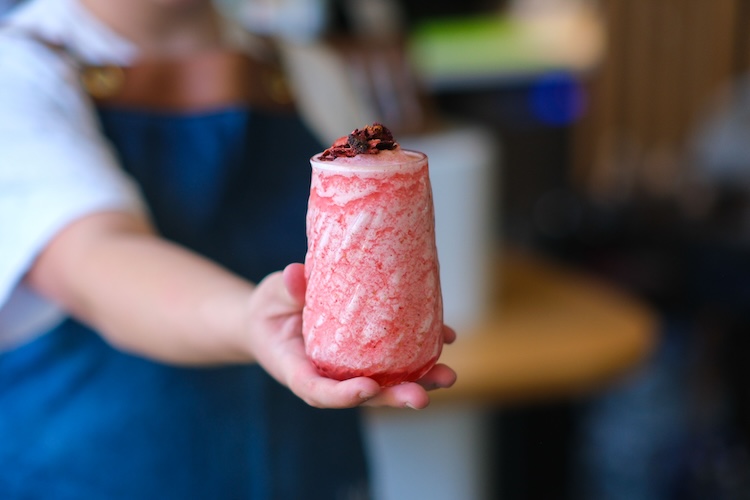
Photo by Emre Gokceoglu from Pexels
What To Ask in Cafés, Restaurants and Hotels
When someone else is making your drink, a few clear questions can make ordering much easier. Ask whether syrups, powders, toppings, and milk alternatives are gluten-free, especially if the drink is blended, shaken, or finished with extras.
It also helps to ask how the drink is prepared. Shared blenders, steam wands, scoops, and garnish containers can pose cross-contact risks when used for drinks containing biscuit pieces, cereal toppings, or malt-based ingredients.
Staff will not always know the answer straight away, and that’s okay. A careful “I’ll check” is far better than a quick guess. If the answer feels vague, choose something simpler, such as bottled water, plain coffee, tea, juice, or a sealed soft drink.
Why Regular Fluids Matter Away From Home
When you’re out for the day, travelling, at an event, or depending on drinks served by someone else, it’s easy to focus on gluten-free safety and forget about drinking enough.
Common signs of dehydration include feeling thirsty, dark yellow urine, dizziness, tiredness, and a dry mouth, lips, or tongue. These symptoms can creep up when safe drink choices are limited or when someone avoids drinking because they are unsure what is gluten-free.
A simple fallback option can make the day easier. Bottled water, sealed juice, plain tea, black coffee, or a clearly labelled soft drink is often easier to verify than a mixed, blended, or seasonal drink.
When Someone Else Controls Access to Safe Drinks
Gluten-free drink choices can become harder when another person is preparing, serving, or managing them. At a café, that might mean checking syrups, toppings, and shared equipment. In a hospital, care setting, or nursing home, it can also mean ensuring suitable drinks are offered regularly, kept within reach, and matched to the person’s needs.
Someone may avoid drinking if they are unsure what is safe, embarrassed to keep asking, or unable to reach a cup without help. Families visiting a loved one can look for small signs: unopened drinks left on a table, cups placed too far away, repeated dry lips, unusual tiredness or confusion, or unclear answers about how fluids are monitored.
One missed drink may be a mistake or a busy moment. Repeated concerns in a nursing home deserve closer attention. If poor fluid intake is repeatedly overlooked and basic questions go unanswered, a nursing home dehydration lawyer can help families understand whether missed hydration support may reflect a broader care problem.
In these settings, safe gluten-free drinks depend on more than the ingredient list. They also depend on routine, access, and whether someone notices when a drink has been left untouched.
Quick Gluten-Free Drinks Checklist
Before accepting a drink prepared by someone else, ask which ingredients were used and whether any syrups, powders, toppings, or add-ins contain gluten.
For blended drinks, ask whether the blender is cleaned between orders and whether it has been used for drinks with biscuit pieces, cereal toppings, or malt-based ingredients.
Choose simpler options when the answer is unclear. Plain tea, standard coffee, bottled water, sealed juice, and clearly labelled soft drinks are often easier to verify than layered, blended, or seasonal drinks.
If you are travelling, visiting a hospital, attending an event, or heading out for a long day, keep a safe backup drink with you where allowed. It’s a small habit that can make gluten-free choices feel much less stressful.
Conclusion
Gluten-free drinks are usually simple once you know where the risks can hide. Plain options are often the easiest choice, while blended drinks, syrups, powders, toppings, and shared equipment deserve a closer look.
When someone else is serving the drink, clear questions make all the difference. A safe choice should feel reassuring, not like a guessing game, and a little preparation can make drinking gluten-free away from home much easier.
Photo Credit
Photo by: Azra Melek
Share the love!
Related recipes 🔗
Becky ✍️
 Hi, I am Becky. I am a passionate recipe maker and having been a coeliac (celiac) for 30+ years I focus on gluten-free recipes. My blog is my online cookbook of gluten-free tasty recipes. You can follow me on X: @beckygwg
Meet Becky 👉